How it Works
Advancing Neurotechnology
The NeuroLife® platform is a non-invasive technology designed to sense, decode, and stimulate neuromuscular activity with high resolution.
Accessible, Non-Invasive Innovation
By combining wearable hardware with intelligent algorithms, we provide a data-driven path to functional recovery.
High-Density Sensing
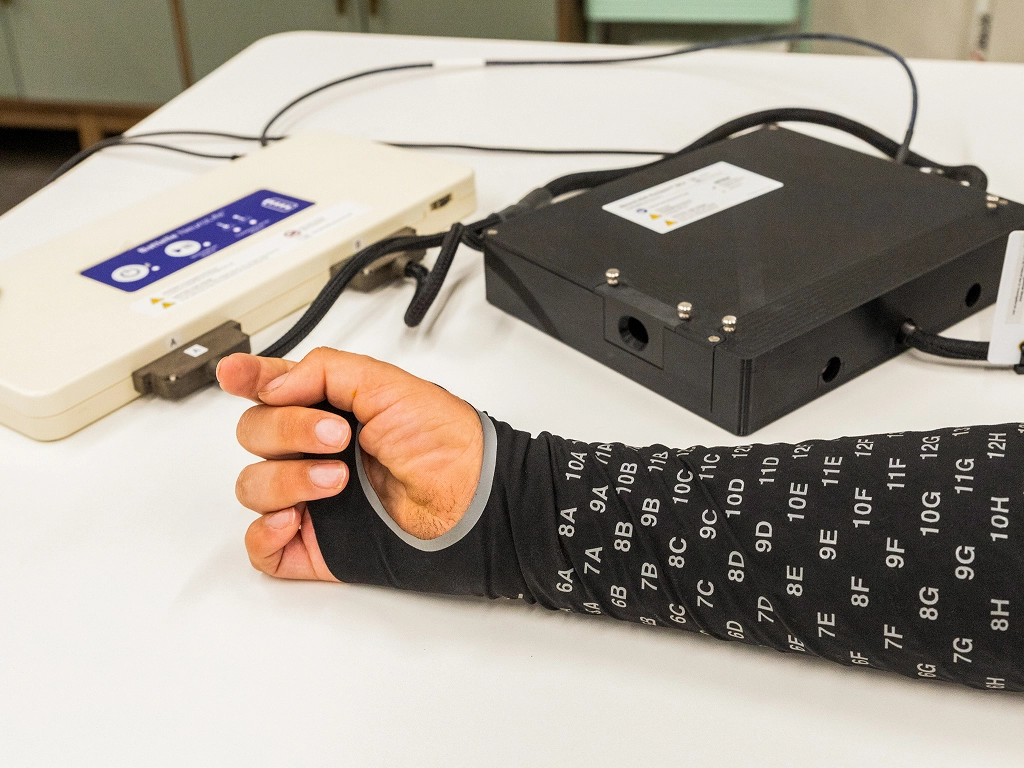
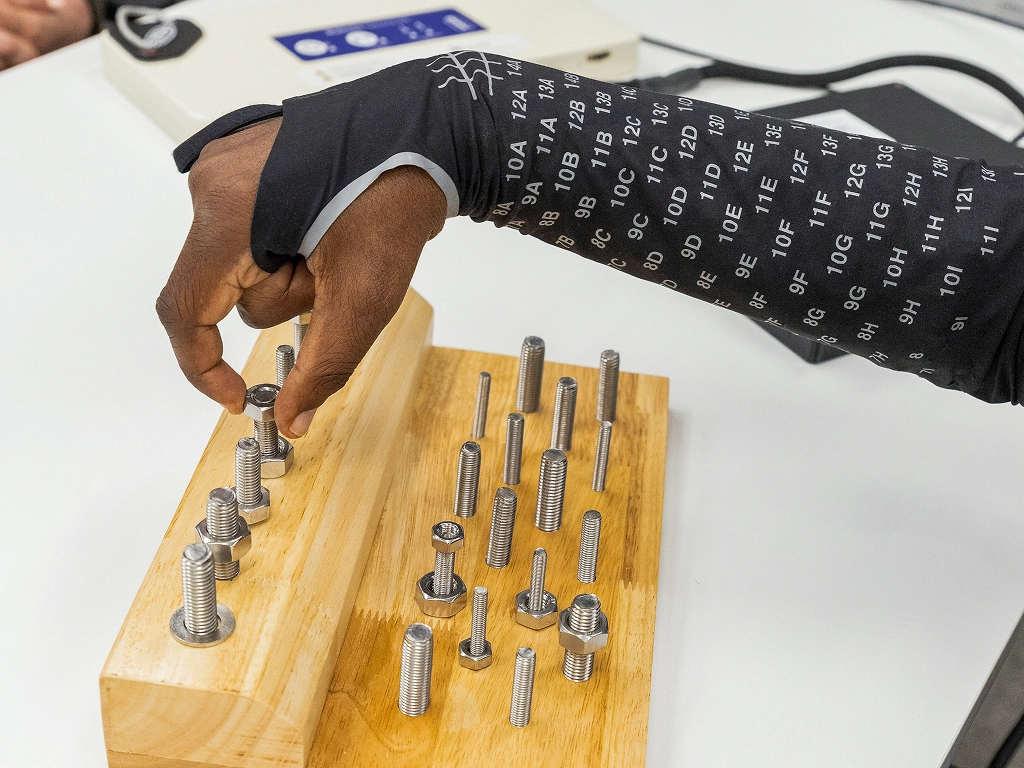
The process begins with our wearable, non-invasive sleeve.
Neuromuscular Capture
High-density EMG arrays capture detailed neuromuscular signals directly from the skin.
Intent Detection
These arrays are designed to pick up subtle electrical patterns that reflect a patient’s movement intent.
Unobtrusive Design
The wearable form factor eliminates the need for invasive procedures or restrictive lab settings.
Intelligent Decoding
Once signals are captured, our proprietary software takes over to interpret the data.
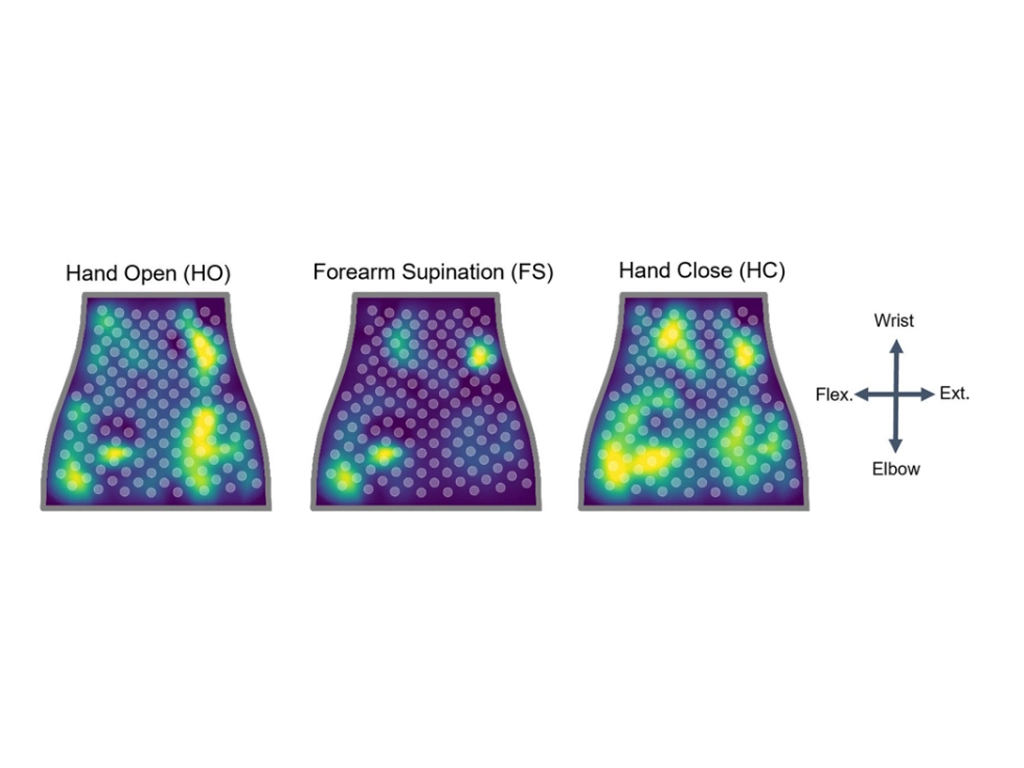
Normalized RMS activity mapped to the sleeve orientation, with a legend showing the orientation of the sleeve mapping (flex.=flexors, ext.=extensors). Note the location of EMG activity is spatially located near the related musculature for each of the 3 movements.
Rapid Calibration
The system uses specialized calibration methods to ensure ease of setup and consistent performance across different therapy sessions.
Signal Translation
Intelligent decoding algorithms translate complex muscle activation patterns into actionable information.
Real-Time Insight
This provides clinicians with immediate, signal-driven data regarding the patient's neuromuscular state.
Adaptive Stimulation
The platform completes the loop by helping the patient achieve functional movement.
Targeted Support
Adaptive stimulation is designed to support the functional use of the upper limb during guided rehabilitation.
Personalized Experience
The stimulation is not generalized; it is tailored to the individual’s signals to support more personalized recovery goals.
Functional Use
Early human studies suggest the platform helps patients engage in meaningful hand and arm movements during therapy.
Seamless Clinical Integration
We designed NeuroLife to fit into the way clinicians already work.

Clinician-Informed
Built with direct input from PTs, OTs, and physiatrists to align with real-world workflows.
Modular Architecture
A flexible design that allows for repeated use and potential future integration with digital health tools.
Accessible Innovation
By focusing on a wearable format, we improve patient comfort and adoption compared to implant-based technologies.